Binghamton University Researchers Develop Power Generating Wallpaper Using Indoor Humidity
The new technology utilizes moisture-absorbing generators to power small indoor electronics while potentially helping to regulate room humidity levels.
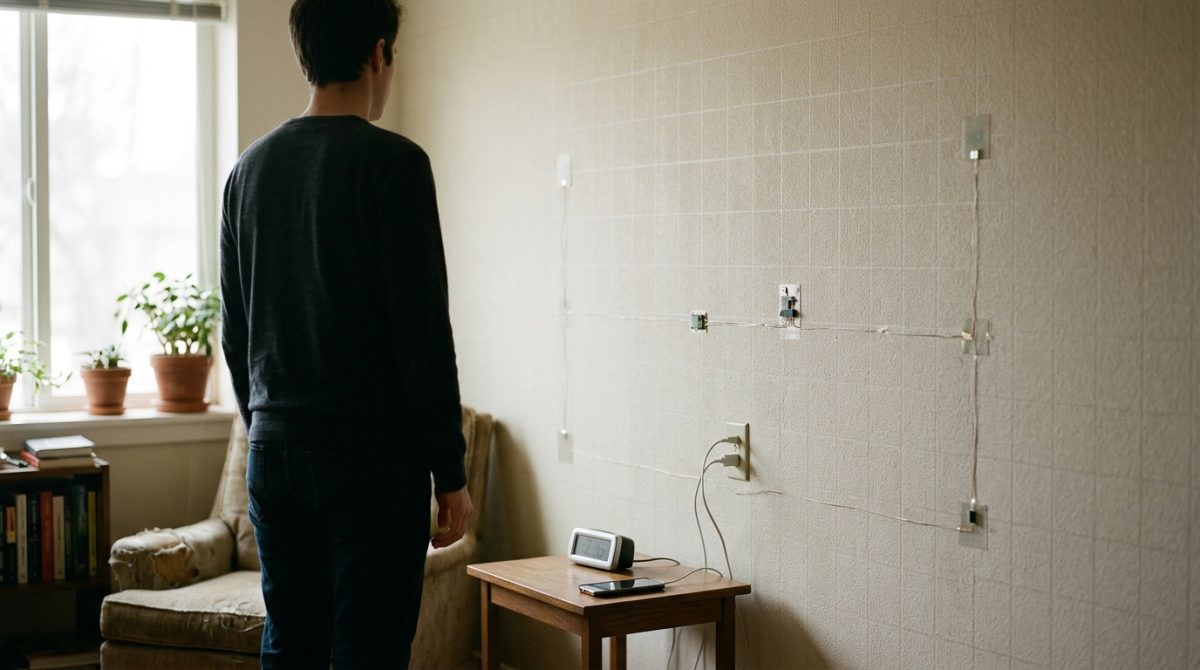
Researchers at Binghamton University have created a novel wallpaper capable of generating electricity by absorbing moisture from indoor air. Led by Professor Seokheun Choi of the Thomas J. Watson College of Engineering and Applied Science, the team designed the material to convert water molecules into small amounts of electric current, offering a potential power source for low-energy indoor devices.
The technology relies on moist-electric generators (MEGs) integrated into the wallpaper. These generators function by absorbing moisture, which facilitates the movement of ions and creates an ion-concentration gradient. This process establishes a voltage between the device's sides, producing electrical energy. The research, which appears in the journal Advanced Energy Materials, was conducted by Choi alongside PhD students Guangya Yuan and Yang Gao.
Unlike previous moisture-based energy harvesting systems designed for outdoor environments, this wallpaper is optimized for indoor conditions where humidity remains relatively stable between 30 and 60 percent. The team noted that daily household activities such as cooking, bathing, and respiration contribute to the moisture levels the wallpaper requires to function. The design features a structure similar to a microchip, using glycerol to capture moisture and a polyvinylpyrrolidone layer to manage evaporation.
To ensure the wallpaper remains aesthetically suitable for residential use, the researchers placed all necessary wiring on the back of the material. The generators are connected in series and parallel configurations to maintain consistent power output. The team aims to refine the technology for mass production, envisioning its use as a dedicated power supply for environmental sensors, smart-building interfaces, and wireless communication modules. Beyond energy generation, the wallpaper could assist in managing indoor humidity, potentially reducing the energy load on traditional HVAC systems.