Lucas Museum Integrates Photovoltaic Glass Into Iconic Architecture
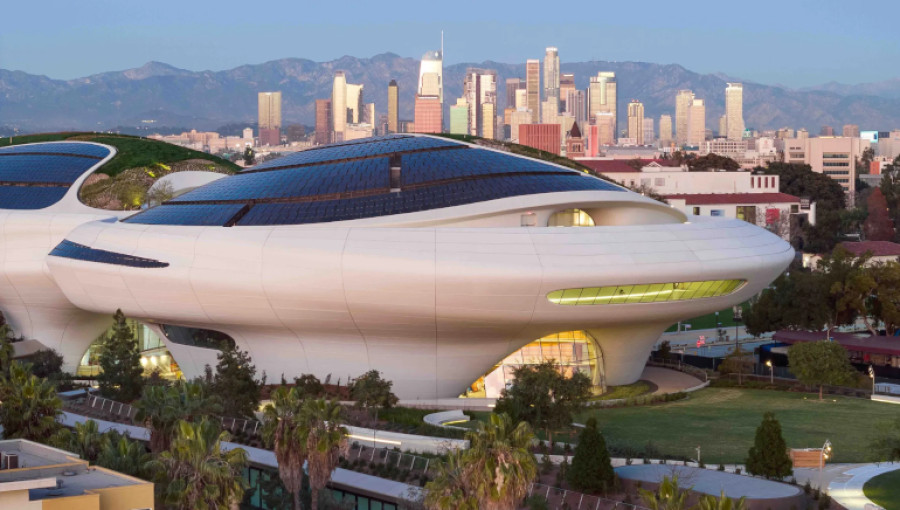
The Lucas Museum of Narrative Art has officially opened in Los Angeles, featuring a unique architectural design that integrates renewable energy directly into its structure. The building, founded by George Lucas and Mellody Hobson, utilizes over 32,000 square feet of photovoltaic glass across its curved rooftop. This installation, which boasts a peak power capacity of 279 kW, highlights the potential for building-integrated photovoltaics to serve as both a functional power source and a core aesthetic element of modern design, marking a significant milestone for sustainable architecture in the region.
Designed by MAD Architects, the 300,000-square-foot facility is situated on a 13-acre campus and is notable for its lack of right angles or flat facades. The roof is split between a green space and the solar array, which was engineered by the Spanish firm Onyx Solar. To maintain the building's specific visual requirements, the solar modules consist of high-efficiency monocrystalline silicon solar cells finished with a black rear coating. Because of the building's complex, curved geometry, the team fabricated custom tapered panels to ensure the array followed the roof's precise contours.
The installation process was managed by electrical contractor Baker Electric, which utilized IronRidge XR1000 profiles and clamps to secure the glass. According to Diego Cuevas, VP of Onyx Solar North America, the project serves as a prime example of how solar technology can be seamlessly woven into the fabric of a building rather than simply being an afterthought. This is not the first time Onyx Solar’s technology has been utilized in high-profile U.S. projects; the company previously provided solar glass for the former Bell Labs headquarters in New Jersey.