Batteries Emerge As Cost Effective Backbone For Future Global Energy Systems
New research suggests sodium-ion technology and vehicle-to-grid integration will eliminate material and cost bottlenecks for renewable energy storage by 2050.
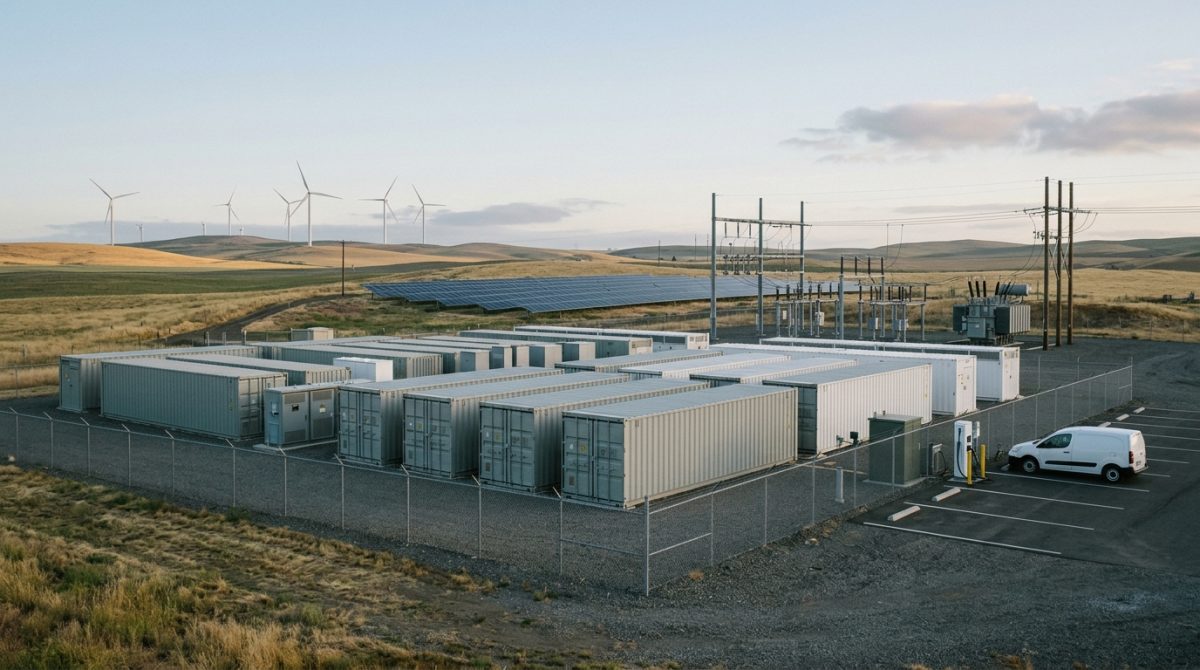
Battery technology is poised to overcome potential material and cost constraints to become the foundation of future renewable energy systems. While concerns regarding lithium availability persist, the emergence of sodium-ion batteries offers a viable alternative using abundant materials like hard carbon and aluminum. These batteries are already nearing cost parity with lithium-ion versions, with projected system-level costs falling significantly by 2050.
Global energy models estimate a total battery demand exceeding 350 TWh by mid-century, with mobile applications in electric vehicles accounting for the majority of this capacity. Research indicates that a cost-optimized, fully renewable energy system requires a battery capacity to solar PV ratio of approximately 0.8 kWh/kW. For individual solar prosumers, integrating battery storage alongside heat pumps and electric vehicles enhances energy supply efficiency, with grid parity expected in most regions by 2035.
The integration of smart charging and vehicle-to-grid technology serves as a critical flexibility tool for balancing variable renewable generation. By enabling electric vehicles to act as distributed storage, power systems can reduce the need for utility-scale battery capacity by roughly 50%. Although this requires incentives for vehicle owners and expanded public charging infrastructure, the approach could lower total annual system costs by approximately 4%.
Battery energy storage systems are increasingly favored for their rapid response, modularity, and efficiency compared to other storage methods like pumped hydro or thermal storage. As solar PV is projected to provide about 61% of the global primary energy supply by 2050, the versatility of battery storage remains essential. This is particularly true for isolated grids and off-grid systems, where rising diesel costs continue to drive the adoption of decentralized solar and wind configurations.
The findings were published by researchers at LUT University, a Finnish public research institution, as part of a monthly column focusing on energy transition and power system analysis.