Worlds Largest Electric Ferry Completes Historic Transoceanic Journey

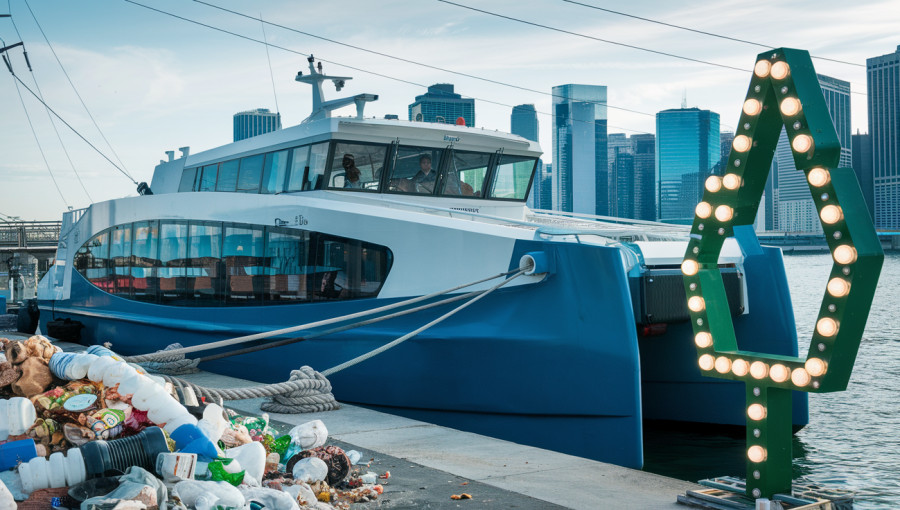
The China Zorrilla, recognized as the world’s largest battery-electric ship, has successfully completed its long-distance transit from Tasmania to Uruguay. Constructed by Incat, the 130-meter aluminum catamaran is powered by a massive array of 5,016 battery cells, totaling over 40 megawatt-hours. This vessel, designed for ferry operator Buquebus, features three decks capable of carrying 2,100 passengers and 225 vehicles. By utilizing eight electric waterjets instead of traditional fuel-based engines, the ship eliminates exhaust emissions entirely, marking a significant milestone in maritime engineering as it prepares for its new service route across the River Plate.
The vessel’s arrival at Colonia del Sacramento follows a journey across thousands of miles, during which it was transported by the heavy lift ship Black Marlin. The catamaran is designed to reach service speeds of approximately 25 knots. Beyond the ship itself, the project involves a substantial investment in land-based infrastructure, with Uruguay committing roughly 20 million dollars to develop high-power charging stations at the terminal. These chargers are intended to provide rapid top-ups between the ship's scheduled crossings.
The operational success of the China Zorrilla now hinges on the efficiency of its charging cycle. While the battery technology itself is proven, the project faces the unprecedented challenge of determining whether the local electrical grid can effectively recharge such a massive energy storage system within the short timeframe required for passenger turnover. The ferry is slated to perform four crossings daily, making the speed and reliability of the terminal's charging infrastructure a critical factor in the long-term viability of this large-scale electric maritime transport initiative.