Two Blade Wind Turbine Design Challenges Industry Standards
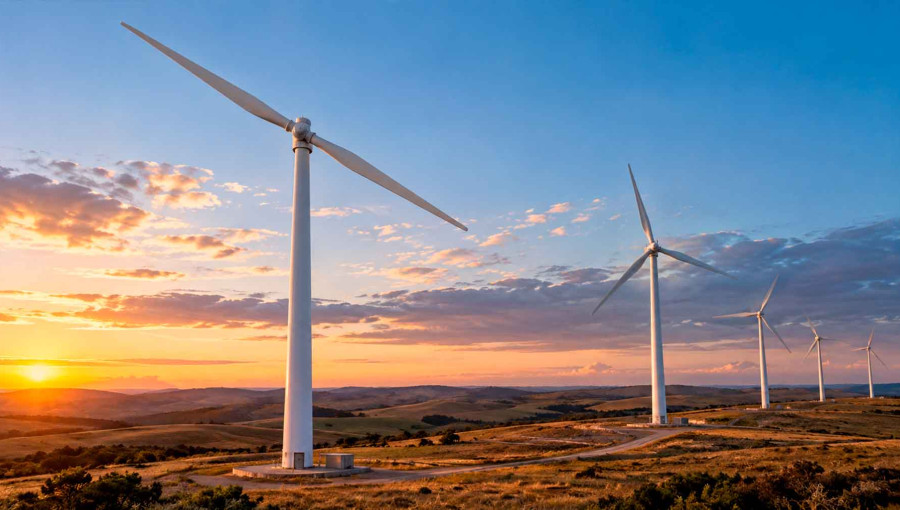
A two-blade wind turbine rotor has successfully operated for over 500 days, challenging the long-standing industry assumption that three blades are essential for optimal energy capture. Developed by the Envision Group, this modular, lightweight design matches the performance and power output of conventional three-blade machines. By simplifying logistics and reducing the complexity associated with transporting and assembling massive turbine components, this innovation offers a more cost-effective and scalable solution. As global electricity demand surges due to data centers and industrial electrification, this alternative design could significantly accelerate the deployment of wind power capacity across diverse terrains.
For decades, the three-blade configuration has been the standard for wind energy, based on the belief that additional blades were necessary to maximize energy production. However, as global power grids face increasing strain from rising electricity consumption, the industry has sought ways to scale green energy more rapidly. While developers have traditionally responded by building taller towers and larger blades, these massive structures have introduced significant logistical hurdles, including specialized transport requirements and complex, time-consuming on-site assembly processes that drive up project costs.
To address these challenges, Envision Energy developed a two-blade smart turbine based on its Model X platform. By utilizing a lightweight, modular structure and high-speed Doubly-Fed Induction Generator technology, the design effectively manages load imbalances and vibrations that previously hindered two-blade systems. Following two years of rigorous testing at a verification center, the prototype demonstrated a 99.3% availability rate over 500 days of stable operation. The results confirm that the two-blade rotor is a viable, high-performing alternative to traditional designs.
By streamlining the installation process and reducing the financial burden of large-scale wind projects, this technology provides a path to faster grid integration. As the world works to meet modern energy demands, the success of this two-blade turbine proves that conventional three-blade designs are no longer the only path forward. Incorporating such innovative, modular engineering into future project pipelines will be essential for expanding clean generation capacity efficiently and keeping pace with the rapid electrification of global industry and transportation.