Tesla Expands Vehicle To Home Backup Power Capability To Model Lineup
New Model 3 and Model Y vehicles can now provide home backup power when paired with a Powerwall 3 battery system.
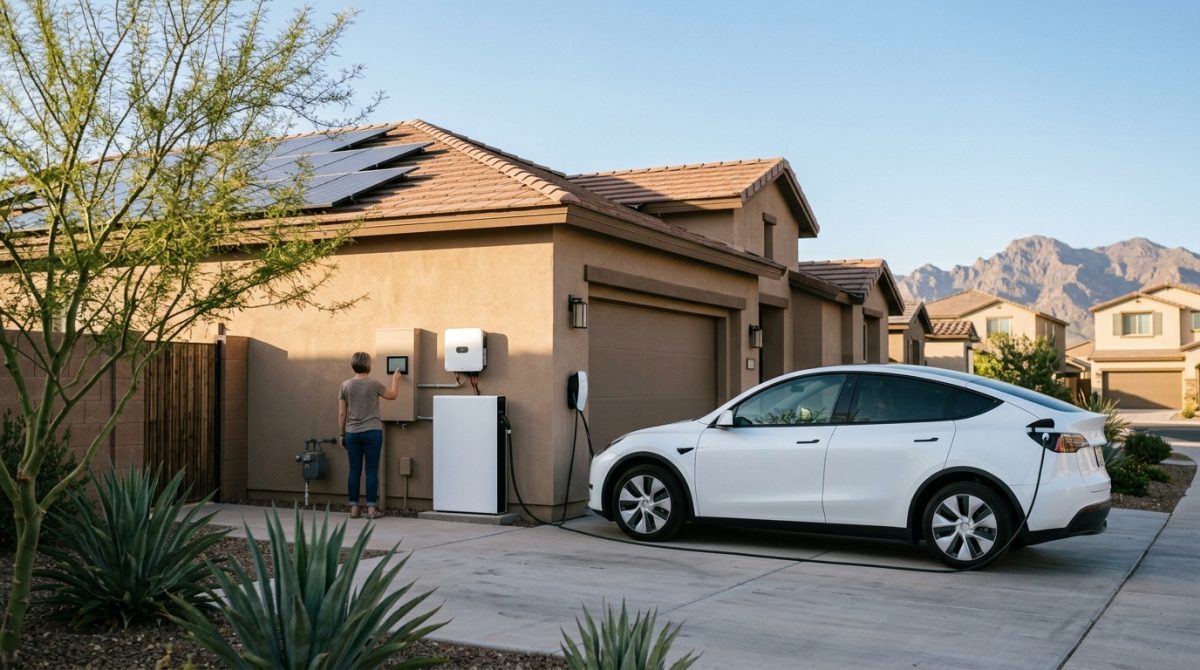
Tesla has announced that its new Model 3 and Model Y electric vehicles now support vehicle-to-home (V2H) backup power, allowing the cars to supply electricity to a residence during outages. This capability, previously limited to the Cybertruck, utilizes AC bidirectional charging to convert power directly within the vehicle, bypassing the need for expensive external DC bidirectional charging hardware.
To enable this feature, homeowners must have a Powerwall 3 battery installed. The setup requires a standard Tesla Wall Connector, which retails for $595. According to the company, this configuration can provide between two and three days of additional backup power. For Cybertruck owners, the system is more flexible as it does not require a Powerwall, instead utilizing a specific V2H hardware package that retails for $1,990 plus installation costs.
These costs are significantly lower than the $6,500 to $10,000 typically required for DC bidirectional charging systems. Colby Hastings, head of Tesla Energy’s residential energy business, stated that the company focused on this architecture because it offers a more scalable and cost-effective pathway for consumers. By integrating power conversion hardware directly into the vehicles, Tesla aims to reduce the financial barriers that have historically limited the adoption of V2H technology.
While other automakers have explored V2H capabilities, most rely on DC systems that require separate, costly conversion equipment. Industry experts suggest that the shift toward AC bidirectional charging could make V2H systems more economical for both manufacturers and customers. Zach Woogen, executive director of the Vehicle-Grid Integration Council, noted that the high upfront costs of existing equipment have been a primary constraint in the sector.
Utilities are also monitoring these developments as they seek to manage grid demand. Pacific Gas & Electric is currently testing the interconnection of Tesla’s systems, noting that high equipment costs have previously deterred customer participation in V2H programs. While Tesla has begun enrolling Cybertrucks in grid-support programs with utilities like CenterPoint Energy and Oncor, the V2G capability for the Model 3 and Model Y has not yet been enabled. Tesla continues to integrate its Powerwall batteries into virtual power plant programs to support grid stability during periods of high demand.