Star Catcher Industries Prepares First Orbital Wireless Power Test
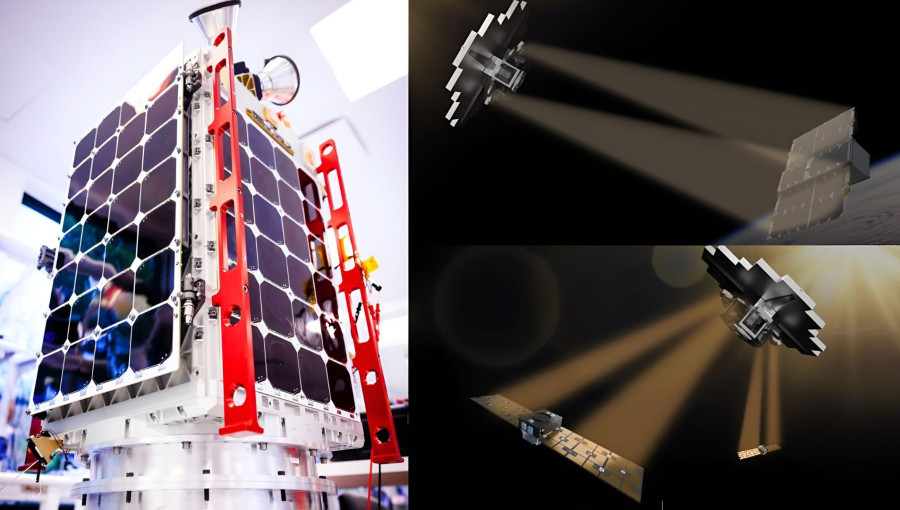
Star Catcher Industries is preparing to launch its Protostar spacecraft, a mission designed to conduct the world’s first wireless optical power transfer in orbit. Scheduled for an October 2026 launch from Vandenberg Space Force Base, the prototype will attempt to beam energy between two independent spacecraft. By successfully transmitting power to a deployed CubeSat equipped with solar panels, the company aims to validate its technology for a future orbital power network. This demonstration serves as a crucial step in proving that satellites can receive energy wirelessly, potentially transforming how space-based assets manage their power requirements.
The Protostar mission integrates several complex systems, including energy harvesting, precise spacecraft tracking, and optical power transmission. While ground-based testing has already occurred at NASA’s Kennedy Space Center and orbital software was validated during the 2025 Sextant Alpha mission, this new flight will test these capabilities simultaneously under real-world orbital conditions. The mission is essential for gathering operational data that cannot be replicated on Earth, specifically regarding the challenges of maintaining a tracking link while both the transmitter and receiver are in motion.
If successful, the technology could offer a significant alternative to traditional onboard power generation. Star Catcher Industries envisions this wireless network supporting various applications, such as national security, orbital computing, and Earth observation. The company has already secured significant backing, including $88 million in venture capital and a $60 million U.S. Space Force STRATFI award. With 10 power purchase agreements already in place with firms like Loft Orbital and Astro Digital, the success of the Protostar mission will be a pivotal milestone in transitioning from experimental prototypes to a functional, commercial orbital power delivery system.