Next2Sun Proposes Overbuilding Existing Solar Parks With Vertical Photovoltaics
Combining vertical and south-facing solar installations can increase grid capacity utilization by 60 percent while reducing infrastructure costs.
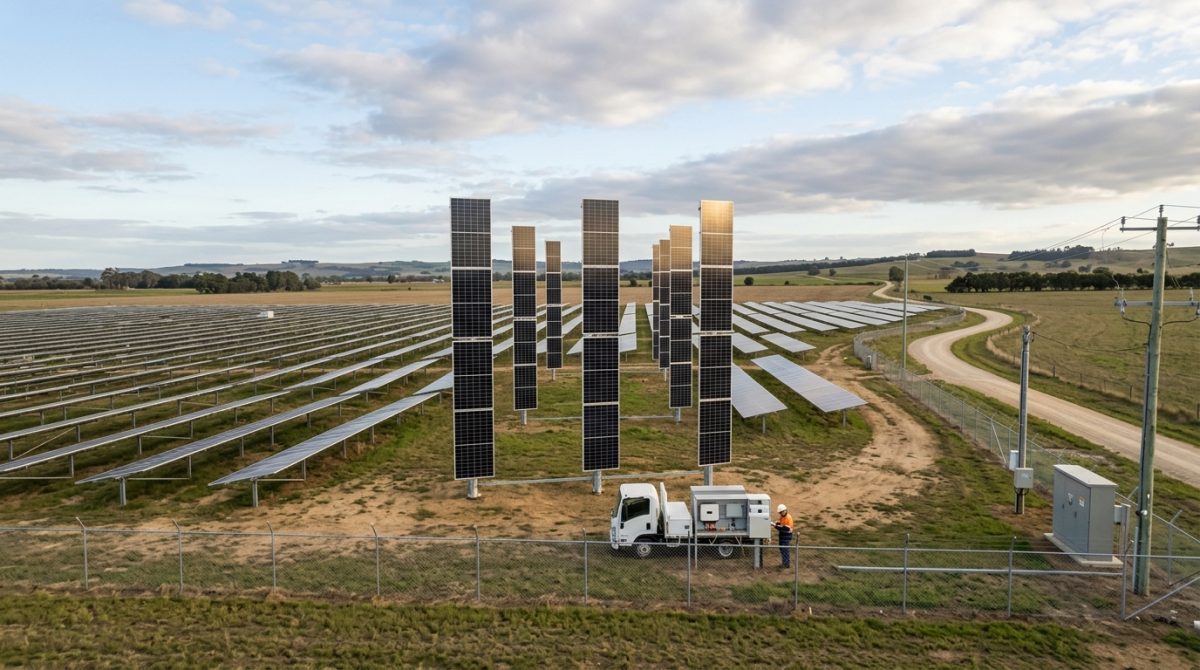
Project developer Next2Sun is advocating for the integration of vertically mounted solar modules into existing south-facing solar parks to address limited grid connection capacity. By overbuilding current grid connections, the company suggests that operators can significantly expand their connected capacity without requiring major infrastructure upgrades. This approach leverages the differing generation profiles of the two technologies to maximize the utility of existing power grid infrastructure.
South-facing solar systems typically reach peak output around midday, which dictates the sizing of grid connections. Vertical installations, however, generate the majority of their electricity during the morning and evening hours. By combining these systems, the feed-in profile is broadened throughout the day. According to Heiko Hildebrandt, Managing Director of Next2Sun, this strategy allows for increased generation while optimizing existing grid assets, as the timing of electricity feed-in is more critical than the total installed capacity.
The developer estimates that connected photovoltaic capacity can be increased by approximately 60 percent through this method without experiencing significant curtailment losses. Beyond grid efficiency, the integration offers economic benefits, including a reduction in infrastructure costs by 10 to 15 percent. Furthermore, the company reports that vertical systems provide a market value for electricity that is 87 percent higher than standard solar parks, based on data from the first five months of the year, due to generation occurring during periods of higher market prices.
This model also extends to agrivoltaics, allowing agricultural land adjacent to existing ground-mounted solar sites to be utilized for vertical installations. These systems can feed electricity into the grid using the existing connection of the neighboring conventional solar park, effectively expanding the potential for dual-use land development.