New Tariffs Drive US Solar Module Prices Up Sharply

The median cost of solar PV modules imported into the United States has surged by over 40% following the introduction of Section 232 tariffs in August. Data from Anza indicates that average prices have climbed from US$0.27/W to US$0.38/W. This sharp increase is directly linked to the new trade regulations, which have ended a period of market uncertainty. As the December 4 deadline for minimum import prices approaches, industry experts warn that supply chain constraints and customs processing times are further complicating procurement, with additional price hikes expected to persist into the coming year.
Anza president Aaron Hall confirmed that the price jump affects various technologies, with TOPCon modules averaging US$0.38/W, PERC modules at US$0.385/W, and heterojunction (HJT) modules reaching US$0.39/W or higher. These figures reflect a market reacting to the domestic manufacturing policy implemented by the Trump administration. Because modules require significant time for international shipping and customs clearance, developers are being urged to finalize procurement decisions well before the December 4 effective date, as lower-cost inventory is already becoming increasingly scarce.
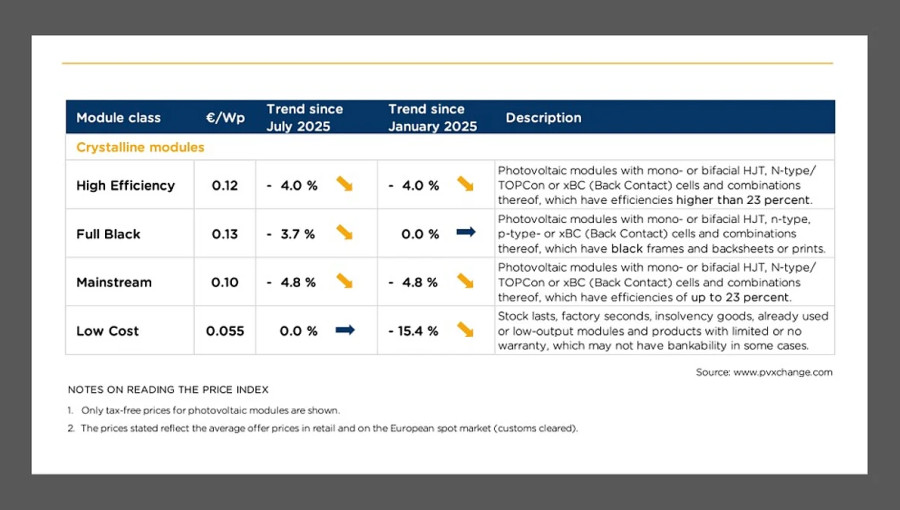
The impact of these trade measures is expected to extend beyond the initial implementation date. Anza’s analysis reveals that quotes for modules delivered after December 4 are already trending approximately 15% higher, signaling a sustained upward trajectory for costs. In response to this volatile environment, industry analysts are advising buyers to prioritize domestic manufacturing sources and secure products that can successfully clear US Customs prior to the deadline. While US prices remain elevated, the global market shows a different trend, as evidenced by European data where prices for several module types declined throughout the summer.