New Amazon Power Plant Stabilizes Brazil Renewable Energy Grid
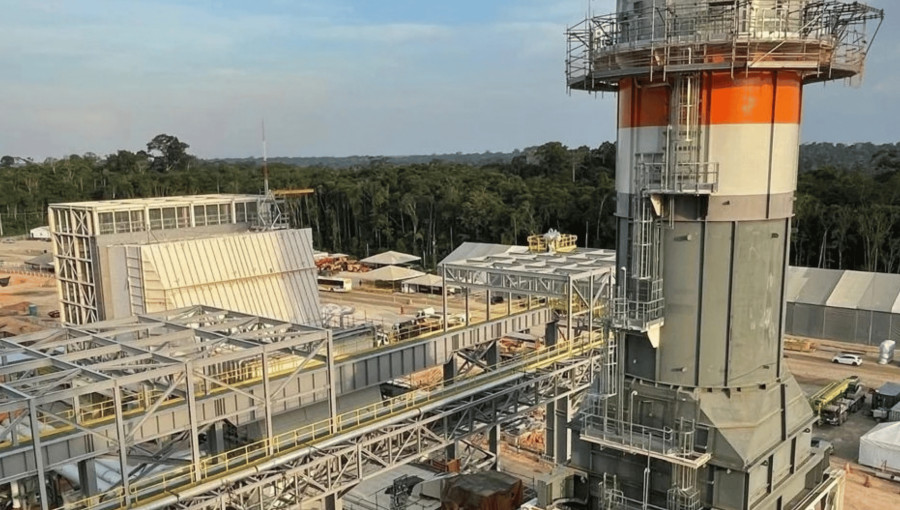
A new thermal power plant, Azulão I, is currently under construction in the remote Amazon Rainforest to provide essential grid stability for Brazil’s growing renewable energy sector. As the nation works toward sourcing 85% of its electricity from renewables by 2035, this facility will act as a critical backup when wind and solar output fluctuates. By integrating advanced engineering solutions directly into the plant’s design, developers are ensuring the facility can safely transmit power across a 1,200-mile line, effectively balancing the grid and supporting the country’s transition toward a more resilient, lower-carbon energy ecosystem.
The project, spearheaded by Eneva and utilizing GE Vernova gas turbine technology, faces unique logistical challenges due to its isolated location. Transmitting electricity over such a vast distance requires the use of series capacitors, which can trigger sub-synchronous resonance (SSR). This phenomenon creates energy oscillations capable of causing widespread blackouts or catastrophic mechanical failure within the generator. To prevent these issues, engineers implemented a custom-built blocking filter during the initial design phase, ensuring the equipment was perfectly tuned to the specific risk profile of the site before the plant became operational.
By treating the power plant and the transmission network as a single, interconnected system from the start, the engineering team avoided the common practice of retrofitting components after failures occur. This proactive approach allowed for the identification of critical interactions early in the development process. The integration of flexible gas generation serves as a vital complement to intermittent renewable sources, providing the reliability necessary to maintain grid stability. Once the second phase of the project, Azulão II, reaches completion in 2027, the combined complex is expected to generate sufficient electricity to power four million homes.