Massachusetts Cranberry Bogs Successfully Harvested Under New Solar Installations
Two agrivoltaic projects in Plymouth and Kingston have returned previously unviable cranberry bogs to production while generating renewable energy.
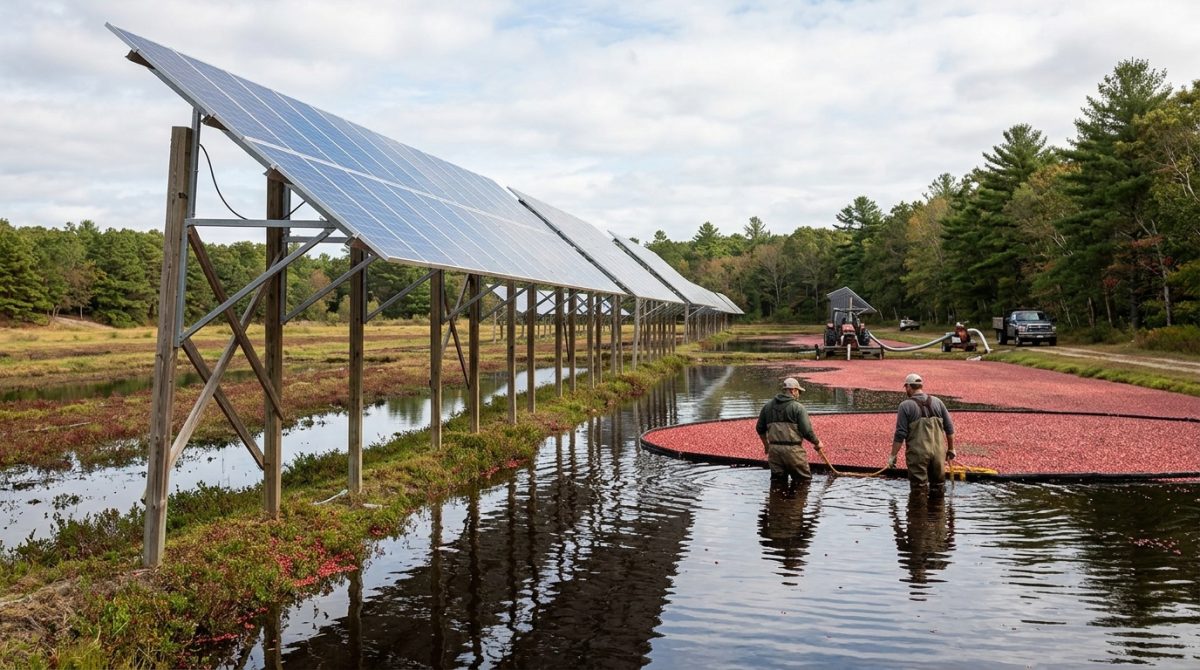
The first cranberry harvest has been completed at two Massachusetts agrivoltaic sites, marking a milestone for dual-use solar energy in challenging wetland environments. The Black Cat Agrivoltaics Project in Plymouth and the Ring Road Agrivoltaics Project in Kingston are owned by developer Greenbacker Renewables and were constructed by Distributed Energy Infrastructure (DEI).
The sites were managed by cranberry farmer Iain Ward, who collaborated with the construction team to protect the perennial cropping system. According to Ward, the projects demonstrate that solar infrastructure can be integrated into diverse agricultural settings, including sensitive wetlands that had previously become financially unviable and remained fallow for years. The solar installations now provide the landowner with lease income, which has enabled the return of active cultivation to the bogs.
The Black Cat project features 1 MW of solar capacity paired with a 2.7 MWh energy storage system. The larger Ring Road project includes 4.4 MW of solar capacity and a 13.5 MWh battery energy storage system. Prateek Tare, executive vice president and co-founder of DEI, noted that the collaboration with the farming team was essential to ensure the build was cost-effective while maintaining the productivity of the land.
Both the Black Cat and Ring Road projects were recognized as finalists for the North American Agrivoltaics Awards. Additionally, both the farmer and the construction firm are founding members of the Solar & Farming Association (SAFA), an industry coalition that represents the interests of developers and agricultural producers involved in the agrivoltaics sector.