Magenta Cadmium Telluride Solar Panels Tested In Swedish Broccoli Agrivoltaic Trial
Researchers found that semitransparent, color-tuned thin-film panels allowed for successful crop growth while generating electricity in a central Sweden field experiment.
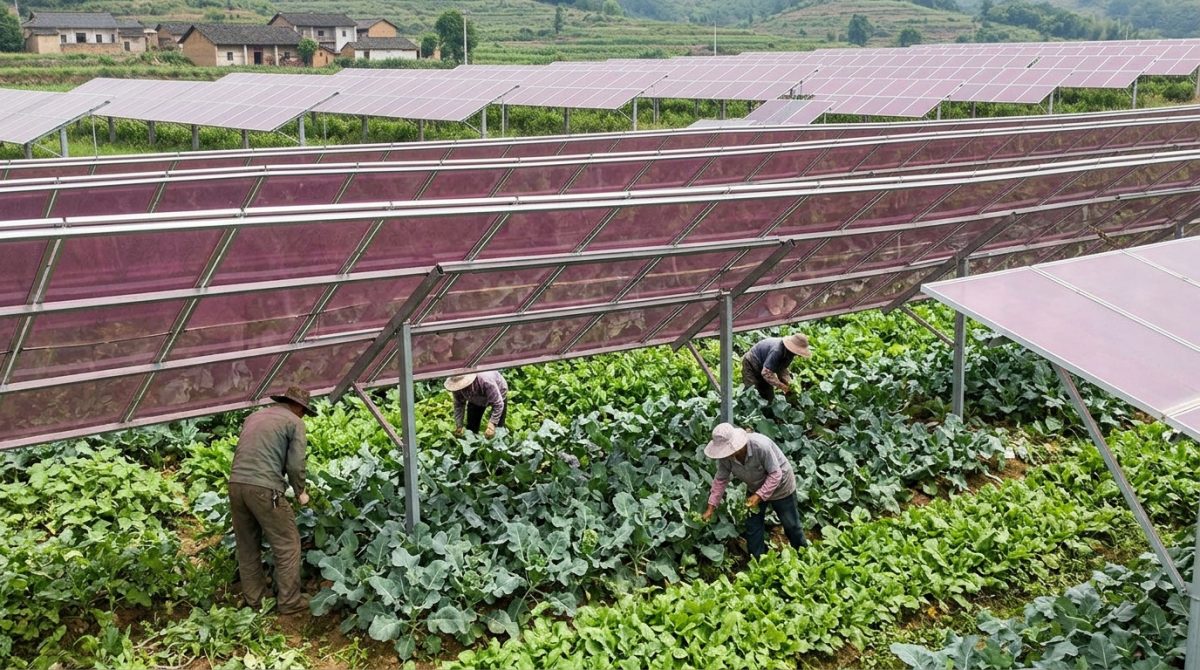
A research team from Sweden and Italy has evaluated the performance of semitransparent, magenta-colored cadmium telluride (CdTe) thin-film solar panels in an agrivoltaic system. The study, conducted during the 2024 growing season at Kärrbo Prästgård in central Sweden, aimed to determine if wavelength-selective solar technology could efficiently balance electricity generation with the light requirements of broccoli crops.
The panels were specifically designed to transmit red and blue light, which are essential for plant chlorophyll absorption. The experiment compared broccoli grown in an open-field control plot against crops cultivated under two PV configurations with nominal transparency levels of 50% and 70%. Each system used 21 panels from Chinese manufacturer Advanced Solar Power, mounted at a 6-degree tilt and a height of 1.5 meters.
Results showed that broccoli grown under both PV systems reached maturity 104 days after transplanting, a 25-day delay compared to the open-field control. However, the fresh head weights of the broccoli under the solar panels were not statistically different from those in the control group. The researchers noted that crop performance was similar regardless of the two transparency levels tested.
Because the crop yields were comparable, the team favored the 50% transparency configuration due to its higher cell density and greater electricity generation potential. The study estimated that the 1.1 kW prototype of this configuration could generate 447.6 kWh during the cultivation period. A theoretical calculation for a one-hectare scale resulted in a land equivalent ratio of 1.18.
The research, titled Evaluating land productivity with semi-transparent colored CdTe thin-film PV and broccoli cultivation in agrivoltaic systems, was published in Cell Reports Physical Science. Contributors included Mälardalen University in Sweden, Italy's National Research Council, and the Catholic University of the Sacred Heart. The team is now conducting further controlled experiments to isolate the effects of specific light spectra on plant physiology.