Iraq Removes Customs Duties On Imported Solar Energy Systems
The government aims to boost private investment and household solar adoption to address significant electricity supply shortages.
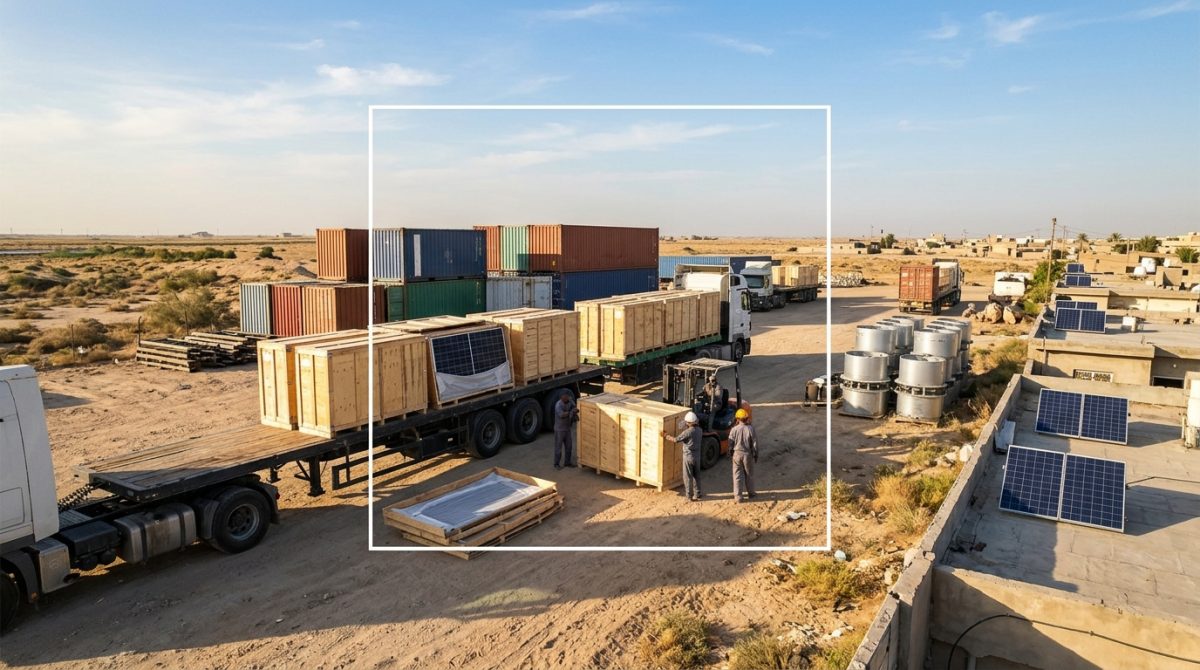
The Iraqi Council of Ministers has approved the elimination of customs duties on imported solar energy systems to accelerate the adoption of renewable power. This policy shift follows a previous reduction in duties from 33% to 5% in February 2026. While the government intends for the change to encourage private investment and residential solar installations, no specific implementation date has been announced.
The decision is part of a broader strategy to diversify the nation's electricity supply and reduce dependence on imported fuels. Iraq currently faces a substantial power deficit, with peak electricity demand estimated between 50 GW and 55 GW, while available generation capacity remains between 27 GW and 28 GW. The country relies on Iranian gas for nearly 40% of its electricity generation, a supply chain that has been strained by regional conflict.
As part of an emergency plan announced in March 2026 to secure energy supplies, Iraq is working toward a target of 12 GW of solar capacity by 2030. Progress is already underway, with TotalEnergies beginning trial operations in March 2026 on the first 250 MW phase of its 1 GW Basra Solar Power Plant. Additionally, the government has launched a program to install solar systems on 850 government buildings over the next six years.
Despite these efforts, solar energy remains a small portion of the national power mix, accounting for 64 MW at the end of 2025 according to the International Renewable Energy Agency (IRENA). However, interest in the technology is growing, supported by falling costs and rising imports. Data indicates that Iraq’s imports of Chinese solar panels rose from 0.43 GW at the end of 2024 to 1.89 GW one year later.