French Court Ruling Supports Battery Storage Projects on Agricultural Land
A final legal decision confirms that battery energy storage systems can be compatible with farming activities on a case-by-case basis.
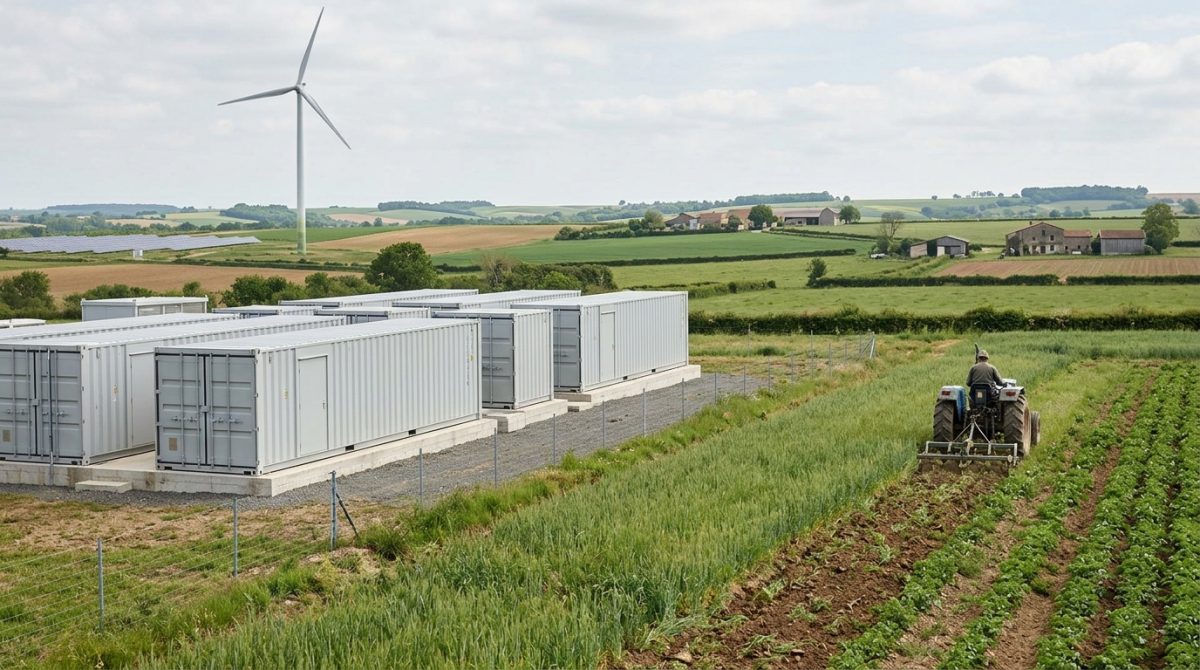
The Nantes Administrative Court of Appeal has finalized a ruling confirming that battery energy storage systems (BESS) can coexist with agricultural operations. The court recorded the withdrawal of an appeal by the French Ministry of Housing and Urban Affairs against a 2025 decision from the Rennes Administrative Court, effectively upholding a permit for a storage project in Redon, Ille-et-Vilaine.
Developed by Renouvelables et Stockage (R&S), the project includes battery containers, inverters, transformers, two delivery substations, and a fire-water reservoir. Although the site is situated in a zone designated for development rather than strictly agricultural use, the land is actively farmed. The project occupies 8,122 square metres of a 20,583 square metre plot, with the farmer committing to continue forage production on the remaining 12,461 square metres.
The Rennes court classified the facility as a technical structure essential for the electricity network, noting its role in balancing production and consumption through its connection to the public transmission grid. Under Article L.151-11 of the French Urban Planning Code, the court determined that such infrastructure is permissible in agricultural, natural, and forest areas provided it does not conflict with local farming, pastoral, or forestry activities.
While the ruling provides clarity for developers, it does not grant a blanket right to construct battery projects on agricultural land. Instead, authorities must continue to evaluate each proposal individually, considering factors such as the total footprint of the installation and the feasibility of maintaining agricultural operations on the surrounding land.
This decision follows a series of legal challenges regarding battery storage in France. In June 2026, the Lille Administrative Court intervened to support a 250 MW battery project, and the Rouen Administrative Court reached a similar conclusion regarding a stationary storage project in July 2026.