Agrivoltaic Projects Require New Financing Models Amidst Financial Market Challenges
Industry experts suggest diversifying revenue streams through environmental services to improve the bankability of hybrid solar and agricultural projects.
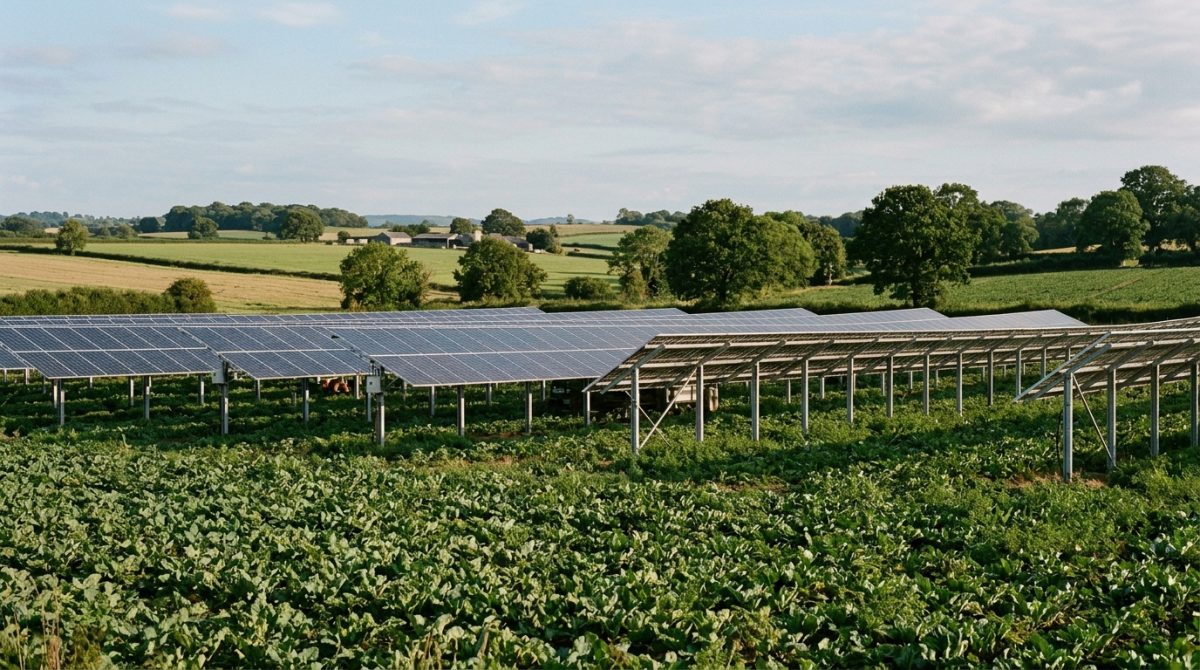
Financial experts at the AgriVoltaics Industry Forum Europe 2026, held in Bordeaux, France, on October 13 and 14, 2026, have highlighted the need for new funding models to support agrivoltaic projects. As rising interest rates and unpredictable electricity revenues complicate traditional financing, stakeholders are exploring ways to secure capital by integrating agricultural and environmental services into their business models.
Laetitia Limongi, renewable energy structured finance manager at Banque Populaire du Sud, noted that banks view agrivoltaics as complex hybrid assets. Lenders must verify that projects can generate electricity while maintaining viable agricultural production. Because these projects lack a long-term track record, banks often impose stricter conditions, higher interest rates, or requirements for additional guarantees to mitigate perceived risks.
Jochen Hauff, founder of the think tank Think Resiliency, explained that current project financing typically relies on a split of 70% bank debt and 30% equity, with 80% of revenue coming from tariffs or support mechanisms. However, market volatility, including grid connection difficulties, curtailment, and negative pricing, makes cash flows harder to predict. Simultaneously, farmers face rising costs for fertilizer, labor, and diesel, which puts further pressure on project margins.
To address these challenges, experts propose a shift toward more diversified revenue structures. A potential model could reduce reliance on support mechanisms to 50%, while increasing the share of revenue from market electricity sales and environmental services to 20%. This approach could also incorporate private debt alongside traditional bank loans and equity, potentially attracting impact investors and specialist funds interested in natural assets.
Monetizing ecological benefits, such as soil carbon storage, biodiversity conservation, and water quality improvements, represents a key opportunity for project developers. By utilizing schemes like France’s Low-Carbon Label, farmers could generate verified carbon credits or payments for ecosystem services. Such revenue streams could help stabilize cash flows and provide the predictability that lenders require.
While these innovative models offer a path forward, the fundamental requirement for bankability remains the ability to present credible, long-term cash-flow projections. As more agrivoltaic projects are deployed and their performance data becomes more widely available, financial institutions are expected to refine their risk models and adjust financing conditions to better support the sector.