
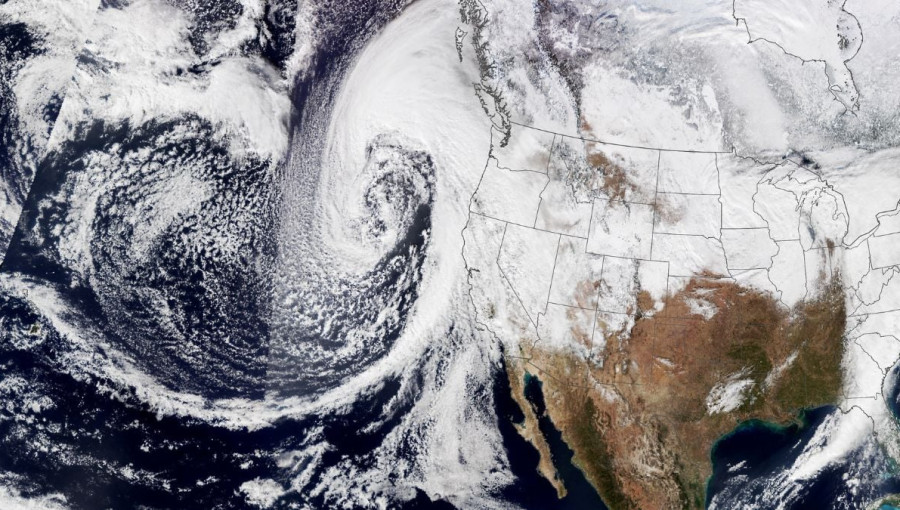
The Atlantic Meridional Overturning Circulation (AMOC), a vital oceanic conveyor belt, is showing signs of slowing due to human-induced climate change. A recent study published in Nature Communications suggests that this weakening could trigger global climatic shifts, most notably by intensifying atmospheric rivers. These concentrated streams of water vapor are projected to become more frequent and potent along North America’s west coast, particularly in California. While these systems are essential for regional water supplies, their increased intensity poses a significant risk of flooding, highlighting the complex, interconnected nature of our planet’s climate systems and weather patterns.
The AMOC functions by transporting warm water from the tropics toward Europe, subsequently cycling cooler water back south along the ocean floor. Scientists have long recognized that this system is decelerating, but new research led by the University of California, Riverside, clarifies how this slowdown influences atmospheric moisture and storm patterns far beyond the Atlantic. By analyzing decades of NASA atmospheric data and climate simulations, researchers found that a weakening AMOC alters the behavior of atmospheric rivers, which are narrow, high-capacity channels of water vapor that can carry massive volumes of moisture.
The impact of these changes will be geographically uneven. While the Arctic, Greenland, and northern Asia may see a decrease in atmospheric river frequency due to cooler surface temperatures, other regions face a different reality. The study projects that the west coast of North America, stretching from Baja California to Alaska, will experience the most significant increase in these storm systems. This shift presents a precarious situation for California, where atmospheric rivers provide up to half of the annual rainfall but also serve as a primary driver of destructive flooding that threatens infrastructure and public safety.
Beyond North America, the research indicates that atmospheric rivers will likely become more frequent and moisture-laden in southern Asia, western Europe, and along the east coast of South America. Furthermore, these systems are contributing to ice loss in Antarctica by facilitating surface warming on ice shelves, which in turn accelerates global sea-level rise. As the high-altitude westerly jet stream shifts toward the poles due to anthropogenic warming, these moisture-heavy rivers are expected to penetrate higher latitudes and persist for longer durations.
Ultimately, the study underscores that the stability of the AMOC is tied to global industrial activities and the resulting greenhouse gas emissions. While the potential for increased storm intensity is concerning, researchers suggest that understanding these atmospheric connections is crucial for future adaptation. By restoring natural landscapes, regions like California may be better positioned to capture water from these intensified systems, potentially mitigating the impacts of persistent droughts. The findings serve as a stark reminder that disruptions to major ocean currents have far-reaching consequences that ripple across the entire globe.