
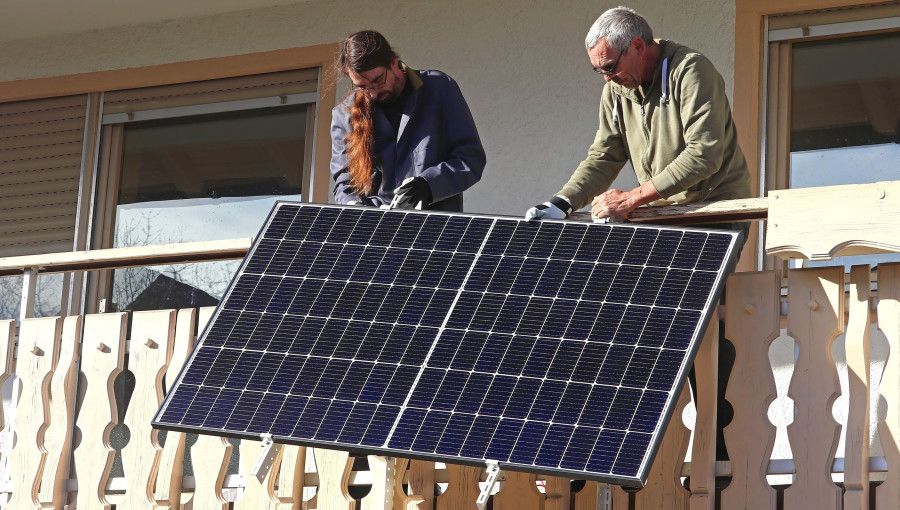
Starting August 27, 2026, new UK legislation will permit the use of “plug-in microgenerators,” allowing residents to connect small-scale solar panels directly into standard three-pin wall sockets. This regulatory shift, formalized under Statutory Instrument 2026/848, aims to make renewable energy accessible to millions of apartment dwellers and renters who were previously excluded from rooftop solar installations. While the systems are limited to an 800W output, experts suggest they can cover household baseloads and offer a realistic payback period of three to five years, potentially saving users between £70 and £155 annually on electricity costs.
The new framework requires that all plug-in solar kits be purchased as complete, manufacturer-certified packages listed on the Energy Networks Association Type Test Register. Each system must include a microinverter to convert DC power to AC, with a maximum output of 800 VA. Safety regulations are stringent: systems must plug directly into a wall socket using a non-rewireable moulded plug with a 5A fuse. The use of extension leads, adapters, or makeshift fasteners is strictly prohibited, and installations are banned on certain materials like timber or high-pressure laminate cladding to mitigate fire risks.
A significant limitation of this initial rollout is the exclusion of integrated battery storage. Because the current rules focus exclusively on generation, any electricity produced that exceeds immediate household demand is exported to the grid, often without compensation under the current Smart Export Guarantee. Consequently, users are encouraged to shift their energy-intensive tasks, such as running dishwashers or washing machines, to daylight hours to maximize self-consumption. Despite these constraints, industry experts view the legislation as a vital first step toward urban energy resilience, with expectations that regulations may expand to include battery storage in the future.
Prospective users must also navigate administrative requirements, including notifying their local Distribution Network Operator via a G98 form. Furthermore, renters and leaseholders are required to obtain permission from their landlords or freeholders before proceeding. Given that individual solar panels weigh approximately 20kg, experts emphasize that installation should be treated as a two-person task. Proper structural anchoring is essential, and users are advised to seek professional assistance if they are uncertain about load-bearing capacities or safety protocols when working at height, particularly on balconies.