
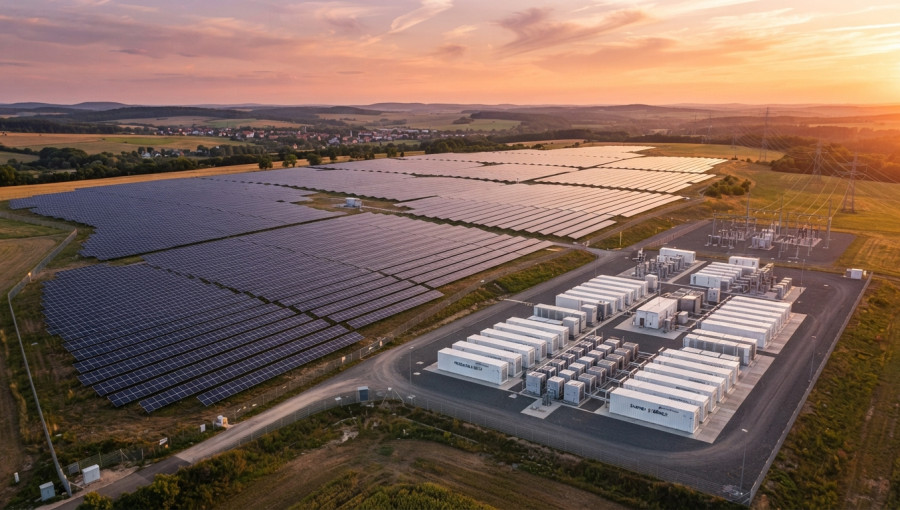
Investment in colocated renewable energy projects, particularly solar-plus-storage, reached a record $25 billion during the first half of 2026. This figure represents a near doubling of the previous record set in late 2025, highlighting a significant surge in global interest. While these projects include various combinations of wind and solar, solar-plus-storage remains the dominant force. By pairing solar modules with grid batteries, developers are successfully addressing the inherent intermittency of solar power, allowing these sites to function more like traditional, on-demand power plants that can respond effectively to fluctuating grid energy needs and market prices.
The United States has emerged as a primary leader in this sector, bolstered by a thriving domestic battery market. Recent data indicates that nearly half of all new storage capacity installed in the U.S. during the last quarter was integrated directly with solar farms. This trend is supported by falling costs for battery cells and increasing developer familiarity with the technology. As solar farms produce excess energy during sunny periods and nothing at night, the addition of storage allows for a more stable and reliable energy supply that better aligns with consumer demand.
Despite the impressive growth in colocated projects, the broader renewable energy sector saw stagnant investment levels between the second half of 2025 and the first half of 2026. This overall plateau was largely driven by a sharp decline in offshore wind financing, which suffered due to unfavorable auction results in countries like Denmark and Germany. Nevertheless, analysts suggest the long-term growth trajectory for renewables remains solid. To effectively reduce CO2 emissions while meeting rising global energy demands, experts emphasize that the world must accelerate investment across all clean-energy categories, rather than relying solely on the expansion of colocated storage projects.