
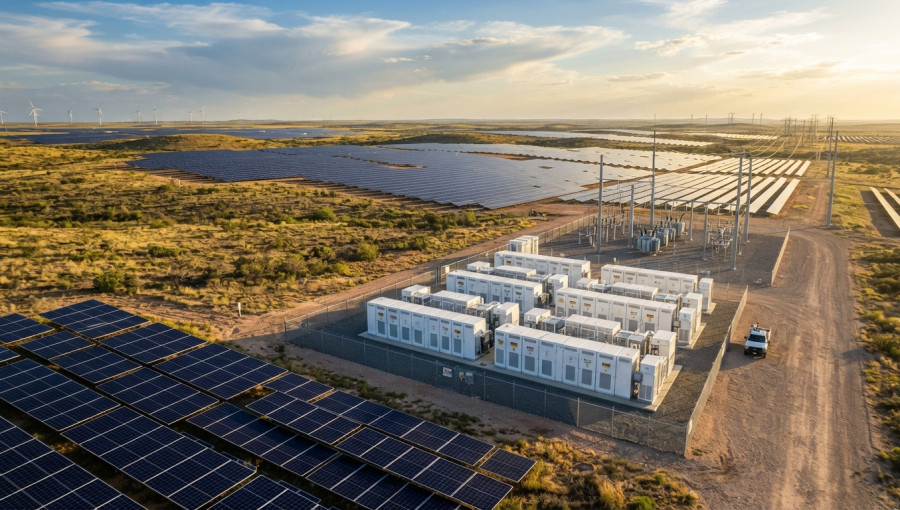
Despite facing significant regulatory headwinds in 2026, including the elimination of tax credits, frozen permitting, and new tariffs, renewable energy continues to lead U.S. power plant construction. Data from the U.S. Energy Information Administration reveals that solar, wind, and energy storage accounted for 90% of all new capacity added to the grid during the first half of the year. Solar and battery systems alone represented over two-thirds of these additions, cementing their role as the primary workhorses of the national power grid as they remain more cost-effective than fossil fuel alternatives.
Texas currently leads the nation in total power plant construction, driven largely by its rapid expansion of solar and energy storage infrastructure. New Mexico also saw a massive surge in capacity following the June completion of the 3.65-gigawatt SunZia wind project, which stands as the largest wind installation in the country. Arizona rounds out the top three, bolstered by its ongoing commitment to solar-plus-storage projects. This trend of renewable dominance has persisted for several years, proving resilient even as the Trump administration’s policies have increased the financial burden of building clean energy projects.
While the current administration has successfully raised construction costs through tariffs and the removal of tax incentives, renewable energy remains more economical than fossil fuels and avoids the CO2 emissions associated with traditional power generation. Future growth in the energy sector may face competition if proposed natural gas facilities intended to power the artificial intelligence industry move forward. Companies like Amazon and OpenAI have discussed gas-fired projects that could individually surpass the total gas capacity added across the U.S. last year. However, these large-scale gas plants remain speculative, while the expansion of solar and storage continues to maintain its strong momentum.