
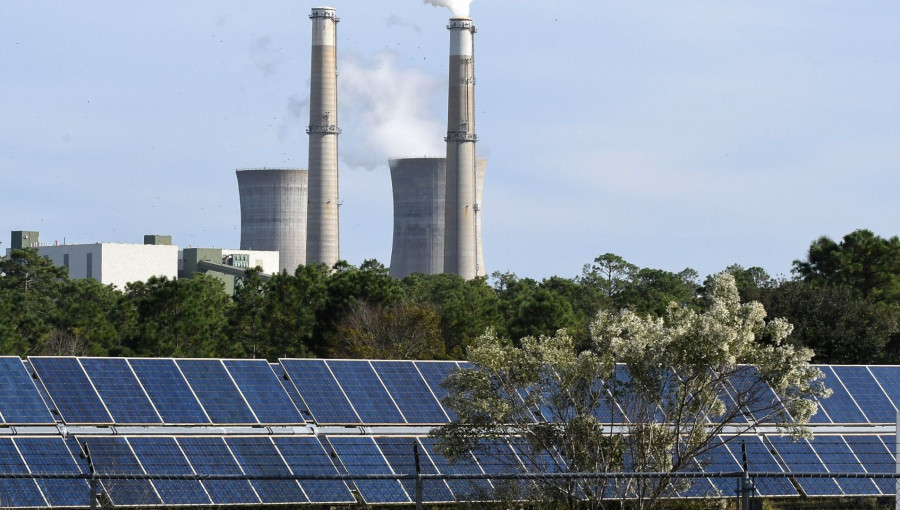
Panamint Capital has officially broken ground on the Big Rooter Power project, a massive $1.7 billion energy development located at the Twin Oaks coal mining site in Robertson County, Texas. This initiative will integrate 1.2 gigawatts of solar capacity alongside the existing 310-megawatt lignite-fired power plant. By incorporating 2 million solar panels, battery storage, and infrastructure for data centers, the project aims to bolster Texas’ power grid. Construction is underway, with the facility expected to reach full operational status by 2029, creating hundreds of jobs and significantly expanding the site’s total energy output.
The project is being executed in two distinct phases. The first, known as Big Rooter West, will provide 491 megawatts of solar capacity and is slated to go online in August 2028. The second phase, Big Rooter East, will add another 658 megawatts, with construction beginning in late 2026 and commercial operations expected by August 2029. Rather than decommissioning the current coal facility, Panamint Capital is utilizing the 10,000-acre site to create a diverse energy hub that combines traditional coal generation with modern renewable infrastructure.
To support this expansion, the development includes the construction of over 20 miles of new 345-kilovolt transmission lines and 1.6 gigawatt-hours of battery energy storage. The site is also being prepared to support 790 megawatts of data center capacity, addressing the surging electricity demand in the region. First Solar will supply the 2 million solar panels, which will be mounted on Nextpower’s NX Horizon solar trackers to maximize efficiency. SOLV Energy has been tapped to oversee the engineering, procurement, and construction, including the installation of the solar arrays and the necessary substation infrastructure.
Panamint Capital emphasizes that this project is designed to enhance American energy infrastructure and maintain reliability on the ERCOT grid. The company has secured a long-term power purchase agreement with an investment-grade offtaker that extends into the 2050s. By prioritizing local hiring and utilizing over 34,000 tons of U.S.-made steel, the project is expected to provide a significant economic boost to the region, contributing over $66 million to the local economy throughout the operational life of the first phase alone.