
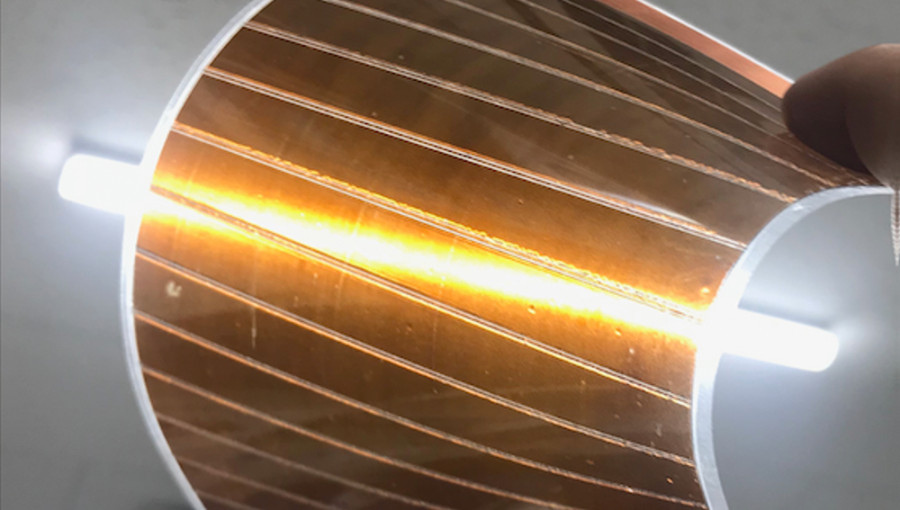
Japan’s Ministry of the Environment has announced that starting in fiscal 2027, traditional silicon solar panels will no longer be eligible for new government subsidy programs. The policy shift aims to redirect financial support toward emerging solar technologies, specifically perovskite solar cells. By prioritizing these next-generation modules, the government seeks to bolster industrial competitiveness and advance its environmental objectives. Officials noted that Japan’s significant control over the global iodine supply—a critical raw material for perovskite production—provides a strategic advantage in fostering the domestic development and deployment of these flexible, lightweight energy solutions.
The transition reflects a broader strategy to integrate advanced PV systems into areas where conventional, rigid panels are impractical to install. The Ministry of Economy, Trade and Industry has set an ambitious target to deploy approximately 20 GW of perovskite-based capacity by 2040. To support this transition, the New Energy and Industrial Technology Development Organization initiated a six-year research and development program in October 2025, focusing on the large-scale manufacturing and field testing of tandem perovskite solar cells.
Beyond manufacturing, the government is investing in a comprehensive research framework spanning 2025 to 2029. This initiative includes 24 distinct research themes covering system integration, grid stability, and recycling processes for next-generation solar cells. These efforts are central to Japan’s overarching solar strategy, which is designed to support the nation’s commitment to achieving carbon neutrality by 2050. By phasing out subsidies for mature silicon technology, the government intends to accelerate the commercialization of more versatile solar applications.