
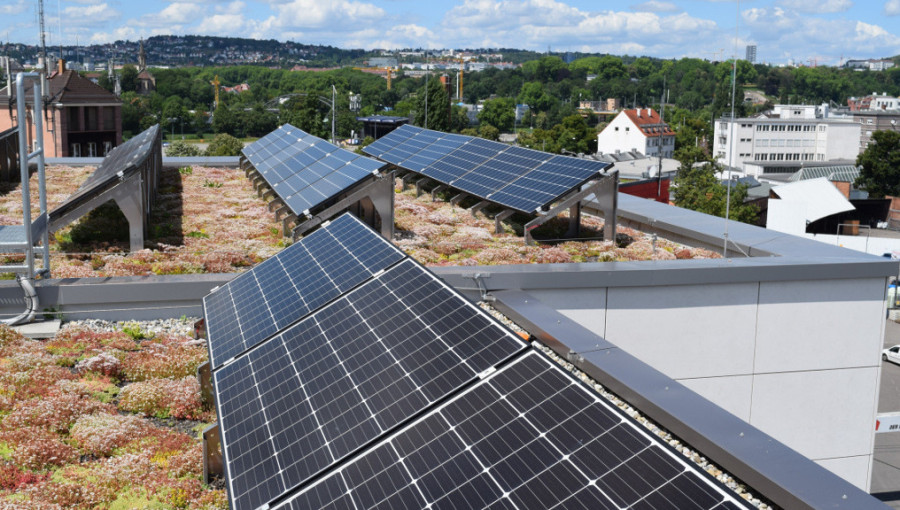
As Europe faces a recurring cycle of intense heatwaves and severe thunderstorms, urban planners and industry experts are increasingly turning to the integration of green roofs with solar modules. This dual-purpose approach serves as a critical climate adaptation strategy, helping to mitigate urban flooding, lower ambient temperatures, and generate clean electricity. By combining vegetation with photovoltaic systems, buildings can effectively manage water runoff while simultaneously cooling the structure. This synergy enhances the efficiency of solar modules, which perform better in the cooler environment provided by green roofs, ensuring reliable power generation during peak cooling demand.
The German Federal Association for Building Greening (BuGG) advocates for the widespread adoption of green roofs and façades to improve urban resilience. Research supports this push, with data from the German Weather Service indicating that high concentrations of green roofs can lower local air temperatures by approximately 0.7 Kelvin. Furthermore, studies from the University of Natural Resources and Life Sciences in Vienna highlight the significant environmental impact of such installations, noting that 850 square metres of façade greenery can provide cooling and oxygen-generating benefits comparable to 45 air conditioning units, with the energy demand easily met by rooftop solar.
Beyond environmental benefits, green roofs offer substantial structural advantages. A joint survey by the BuGG and the Central Association of the German Roofing Trade reveals that vegetation layers protect roof membranes from UV radiation, hail, and extreme temperature fluctuations. Consequently, roofs covered with vegetation or solar green roof systems demonstrate significantly greater longevity compared to unprotected flat roofs. While only 25 percent of standard flat roofs remain in good condition after two decades, over 45 percent of solar green roofs reach this milestone without requiring major repairs, proving that these systems are both a sustainable and durable investment for modern infrastructure.