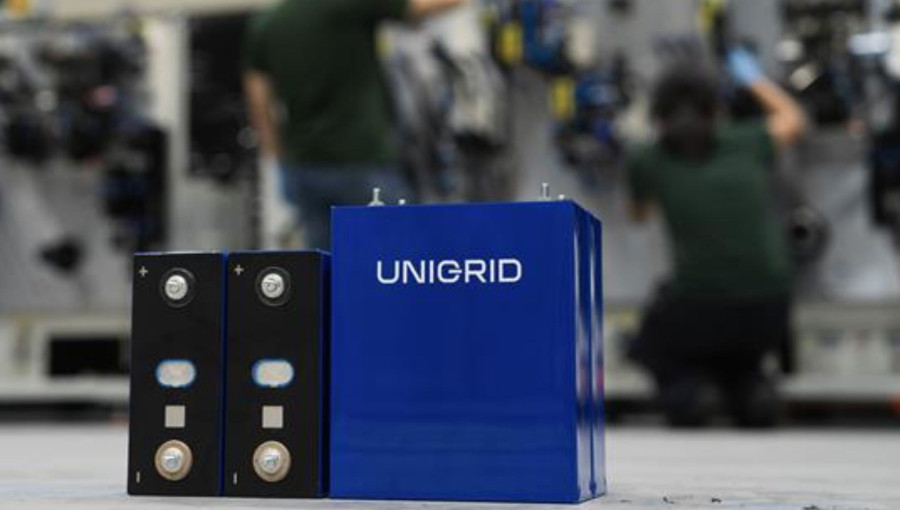
Hyundai Motor Group has successfully completed a rigorous battery validation program with UNIGRID Inc., marking a significant step toward safer grid energy storage. Through the ZER01NE Accelerator initiative, UNIGRID’s sodium chromium oxide (NCO) cell chemistry demonstrated immunity to thermal runaway and fire risks during extreme safety testing. By utilizing abundant, cost-effective sodium rather than supply-constrained materials like lithium, this technology offers a durable alternative for industrial power. Hyundai now plans to integrate these non-flammable Battery Energy Storage Systems into its global manufacturing facilities, aiming to bolster energy resilience while eliminating the need for complex cooling infrastructure.
The persistent fire risk associated with conventional lithium-ion batteries remains a primary obstacle for large-scale energy storage. Thermal runaway, a chain reaction of overheating, poses a catastrophic threat to modern grids and industrial sites. To address this, UNIGRID’s NCO technology was subjected to intense evaluation, proving it can operate safely without the risk of fire or thermal propagation. This development is particularly notable because previous attempts to utilize sodium-ion cells often struggled with poor heat tolerance and limited operational lifespans, issues that the proprietary NCO formulation appears to have overcome.
Performance testing revealed that the 210Ah cells maintained stability across a harsh temperature range of -20°C to 60°C. Because the chemistry remains stable without the risk of runaway, these Battery Energy Storage Systems can operate passively. This removes the requirement for energy-intensive cooling loops, liquid cooling systems, or heavy HVAC units, which typically create parasitic power loads. Furthermore, the NCO chemistry is engineered for exceptional longevity, with the potential to reach 30,000 cycles at 80 percent capacity retention. This suggests a 25-year operational lifespan, significantly outperforming standard lithium iron phosphate batteries.
Beyond safety and performance, the shift to sodium offers a strategic advantage in supply chain management. Unlike lithium, cobalt, and nickel, which are subject to geopolitical tensions and price volatility, sodium is abundant and inexpensive to extract. Hyundai Motor Group is now moving from the evaluation phase to active implementation. By partnering with Korean integration specialists, the company intends to deploy these NCO-based systems as distributed energy resources across its manufacturing plants. This transition supports the firm’s “Green Factory” initiative, providing a reliable, non-flammable power benchmark that protects facilities from grid instability.