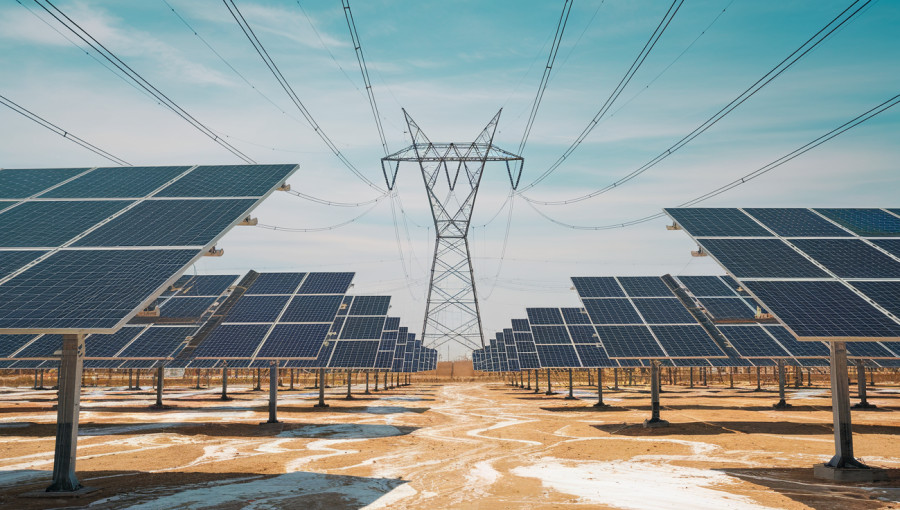
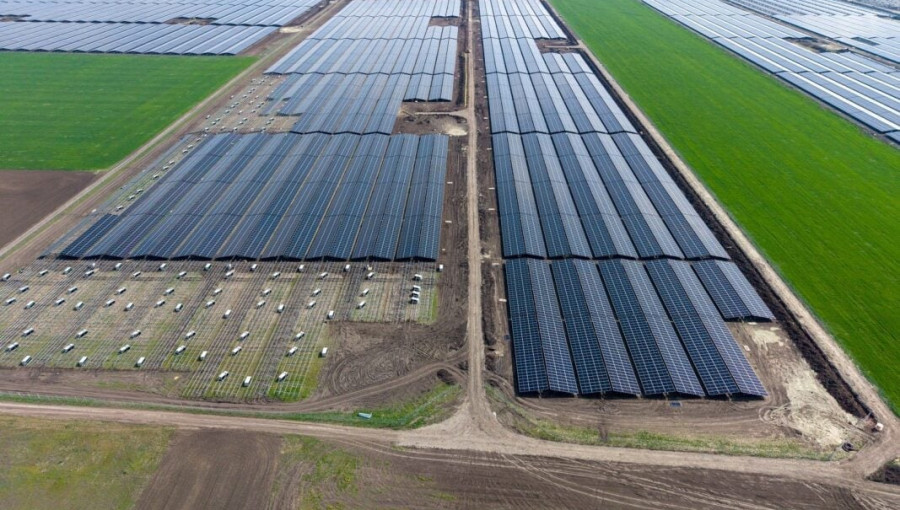
Hydrogen Production Costs Face Limits Unlike Solar Energy Gains
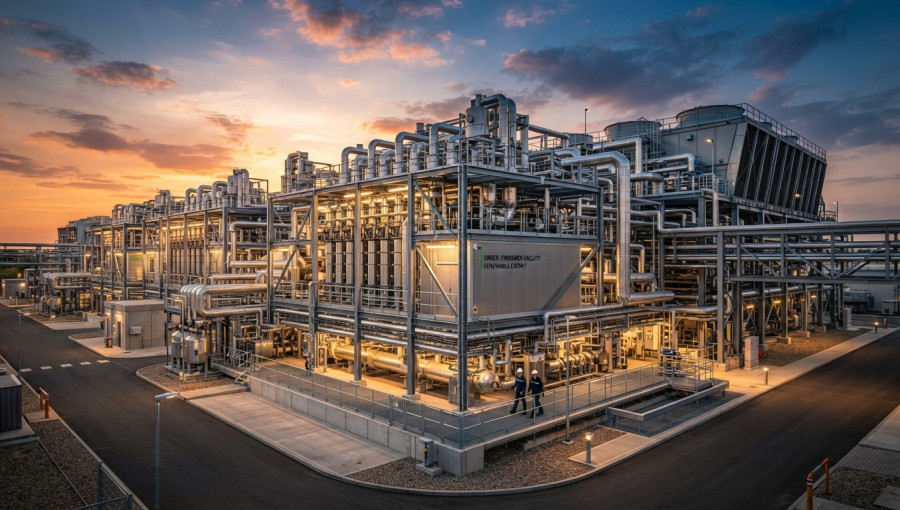
Hydrogen production costs are not following the rapid, consistent decline seen in solar modules and lithium-ion batteries. While solar and battery technologies benefit from the mass production of standardized, repetitive units, hydrogen plants are complex industrial systems requiring extensive engineering, civil works, and specialized equipment. Recent research indicates that much of the observed cost reduction in electrolysis is driven by conventional chemical-plant scale economies—such as using larger compressors and shared infrastructure—rather than the rapid manufacturing learning curves that have historically driven down the costs of solar and battery technologies.
The economic reality of hydrogen production differs significantly from the modular nature of solar energy. Solar modules and battery cells are manufactured in high volumes through repetitive factory processes. In contrast, an electrolyzer plant is a bespoke industrial facility that integrates electrochemical stacks with transformers, rectifiers, gas separation systems, and cooling infrastructure. Because these plants are not identical, standardized units, the cost-reduction mechanisms are fundamentally different. When capacity increases, it often involves scaling up equipment size rather than simply replicating the same manufactured product, which limits the potential for the exponential cost drops seen in other renewable sectors.
A 2025 study by Alberto Galletti and colleagues highlights this distinction by normalizing project costs against plant size. While raw data initially suggested high learning rates for PEM and alkaline electrolysis, these figures dropped significantly once the researchers accounted for economies of scale. For alkaline systems, the learning rate became statistically insignificant after normalization. This confirms that early cost savings are largely front-loaded, resulting from moving away from small-scale demonstrations toward more efficient, larger industrial configurations. Once a plant reaches an optimal industrial size, the percentage of cost reduction per doubling of capacity diminishes significantly.
Ultimately, the path to lower hydrogen costs relies on standard chemical-engineering practices: increasing the size of individual process units until they hit technical or transport constraints, and then consolidating multiple units around shared balance-of-plant equipment. Unlike solar panels, where manufacturing improvements provide a persistent, long-term downward trend in costs, hydrogen electrolysis gains are most pronounced during the initial transition to industrial-scale facilities. Future forecasting must therefore move away from simplistic learning curves and instead focus on the specific, finite savings available through process-engineering optimization and the integration of shared industrial infrastructure.