
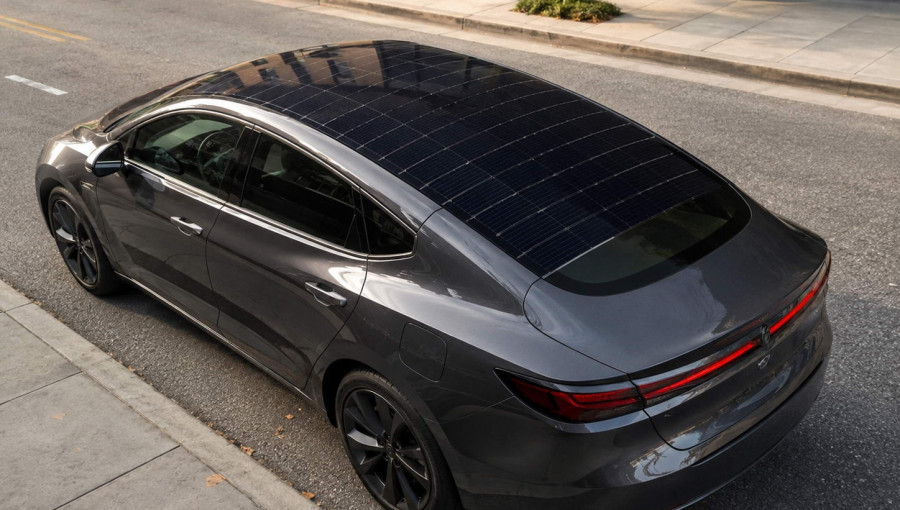
Fuyao Group, the world’s leading automotive glass manufacturer, has confirmed it is moving toward the commercialization of vehicle-integrated solar sunroofs. By embedding photovoltaic cells directly into laminated glass, the company enables vehicles to generate electricity for auxiliary onboard systems. While Fuyao has reached mass-production capabilities, it remains cautious regarding specific client partnerships and technical performance data. This development marks a notable shift for vehicle-integrated PV, moving the technology from experimental prototypes toward broader market availability, as the industry explores how solar integration can effectively manage standby power loads and reduce battery drain in modern electric vehicles.
The technology utilizes a specialized solar sunroof design rather than a full-roof photovoltaic array. According to the company, the integrated solar cells convert sunlight into power, which is then directed to support various electrical equipment within the vehicle. Although industry reports have speculated about potential collaborations with BYD and specific performance metrics—such as a 720 W peak output and 23.18% conversion efficiency using heterojunction solar cell technology—Fuyao has not officially verified these figures, citing commercial confidentiality regarding its clients and pricing structures.
Fuyao’s manufacturing facilities in Fuqing Yangxia and Hefei are currently scaling up production, with a target capacity of 3 million sets of automotive glass by the end of 2025. While it is unclear how much of this output is allocated to solar-integrated products, the company’s progress indicates a clear path toward volume manufacturing. Industry experts note that while vehicle-integrated PV is not a substitute for conventional charging due to surface area constraints, it serves a practical purpose in powering low-energy auxiliary functions, such as ventilation, while the vehicle is parked.