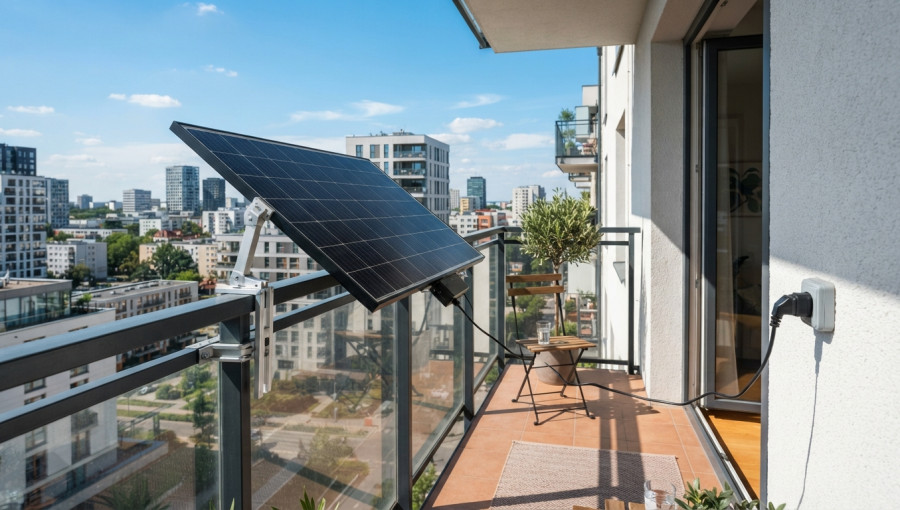
Balcony solar has emerged as a breakout clean energy trend in the United States throughout 2026. While the technology, which allows residents to plug solar panels directly into wall outlets to lower electricity costs, has long been popular in Germany, it only recently gained legal traction in America. Driven by rising power bills, nine states have now legalized these systems, with more legislation pending. Beyond this, the energy sector is seeing a renewed focus on nuclear power, significant progress in European carbon capture initiatives, and a notable surge in domestic solar capacity installations during the second quarter.
The rapid adoption of balcony solar marks a significant shift in the U.S. energy landscape. At the start of the year, Utah was the only state to explicitly permit the use of these plug-in solar modules. However, as consumers sought relief from increasing energy expenses, momentum grew quickly. By April, Virginia joined the movement, followed by Colorado and several Northeastern states. Despite this legislative progress, the market remains in its early stages, with only a limited number of vendors currently offering kits that comply with complex federal and state electrical codes.
In the nuclear sector, a bipartisan push is fueling a resurgence of the industry. The Trump administration has continued its support for plant restarts, recently finalizing a $1.9 billion loan to help NextEra Energy bring the Duane Arnold Energy Center in Iowa back online. Simultaneously, California is reevaluating its nuclear strategy. Lawmakers are considering extending the operational life of the Diablo Canyon plant through 2045, backed by $271 million in federal funding from the Department of Energy, marking a departure from previous plans to shutter the facility.
Europe has also achieved milestones in carbon capture technology with the launch of two new facilities. The largest project, located at a Yara International ammonia plant in the Netherlands, is designed to capture 800,000 metric tons of CO2 annually for sub-seabed storage. A smaller facility in Germany, operated by Cool Planet Technologies at a Holcim cement plant, will capture 10,000 metric tons per year for industrial reuse. Despite these developments, the industry continues to face challenges, including high operational costs and skepticism regarding the long-term viability of carbon capture as a primary climate solution.
Broader industry data highlights a complex environment for the energy transition. The U.S. solar sector saw a robust second quarter, installing 11.4 GW of capacity as developers rushed to utilize federal incentives. Conversely, global investment in clean technology has slowed, declining 17% in the first half of 2026. Meanwhile, the battery storage industry faces potential headwinds from executive orders targeting foreign-made grid components, and global coal demand is projected to rise due to geopolitical instability and increased cooling needs driven by El Niño weather patterns.