
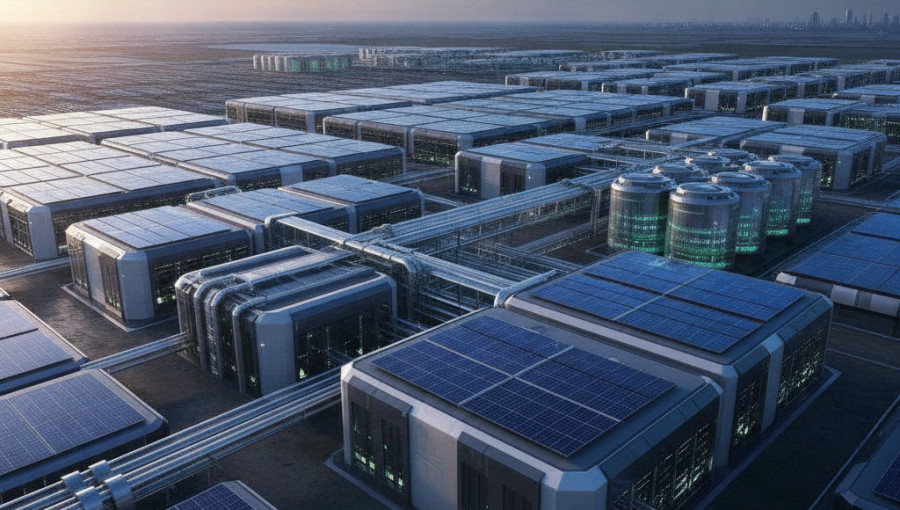
Artificial intelligence has rapidly transitioned from an academic pursuit into a dominant global industry, fundamentally reshaping corporate strategies and economic policies. This surge in AI-related investment, particularly in the construction of massive data centers, has become a primary driver of GDP growth. However, this digital expansion is creating a profound two-way dependency with the energy sector. While AI offers transformative potential to improve grid efficiency and accelerate clean technology innovation, its massive electricity requirements are placing unprecedented strain on power systems, forcing a critical re-evaluation of how energy is generated, managed, and delivered to support future digital infrastructure.
The rapid evolution of AI, moving from classical machine learning to the current “agentic” era of autonomous decision-making, has necessitated the construction of power-hungry data centers at an industrial scale. A typical AI-focused facility now consumes as much electricity as 100,000 households, and the largest projects under construction are expected to require significantly more. With global data center electricity consumption growing at 13% annually, projections suggest that by 2030, these facilities could account for a share of global electricity demand comparable to that of entire nations like Japan.
This massive demand is colliding with existing constraints in electricity grid infrastructure. In many regions, transmission networks are struggling to keep pace with the surge in connection requests, leading to multiyear delays that threaten the viability of planned data center projects. As a result, developers are increasingly exploring “bring your own power” strategies and co-location models, placing data centers directly adjacent to power plants to bypass congested transmission lines. This shift is blurring the traditional lines between digital and energy infrastructure, as data center operators become active participants in energy procurement and grid management.
To meet their decarbonization commitments while securing the reliable, 24/7 power required for high-load AI training, technology companies are diversifying their energy portfolios. While renewables remain a cornerstone of this strategy, their inherent intermittency is driving increased interest in hybrid systems that combine solar and wind with battery energy storage and hydrogen fuel cells. Furthermore, there is growing momentum behind firm, low-carbon baseload options, including small modular reactors and enhanced geothermal systems, which offer the high capacity factors necessary to support the continuous demands of modern AI workloads.
The geographic landscape of this expansion is also shifting. Traditional data center hubs in Western Europe are facing land and power constraints, prompting a rebalancing of growth toward the Europe Central region. Countries in this area are attracting investment by leveraging strong clean-energy penetration, favorable climates that reduce cooling requirements, and strategic network connectivity. As the industry matures, the future of AI and energy will become increasingly inseparable, requiring a coordinated approach between technology providers, energy companies, and policymakers to ensure that the digital revolution supports, rather than strains, the global energy transition.